

Are you looking to get your workout done, or are you looking for it to actually work?
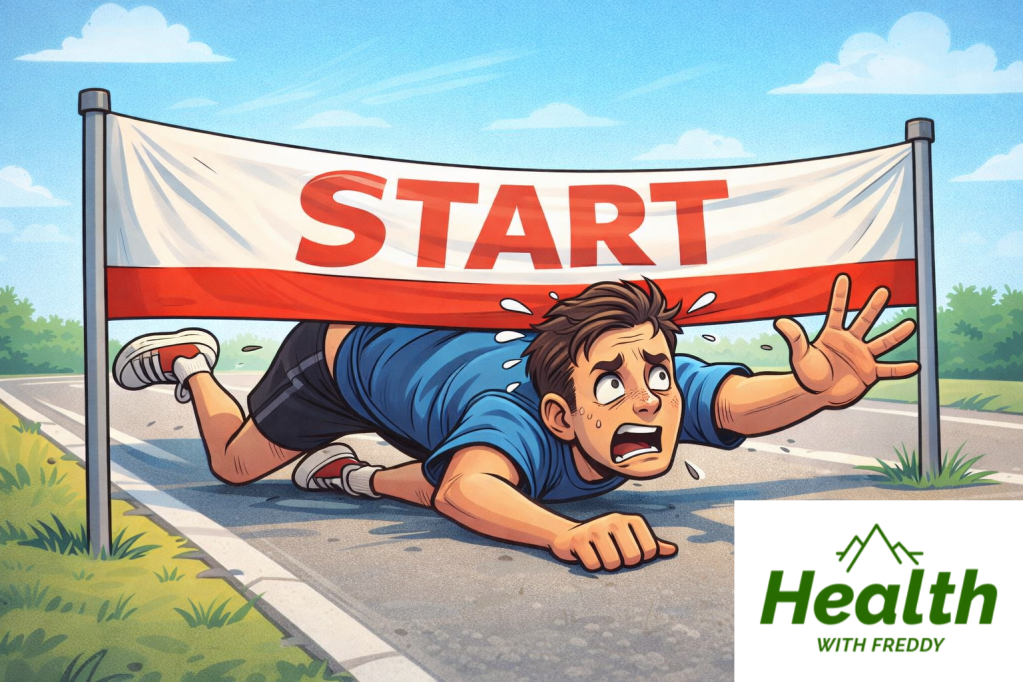
Here’s what really grinds my gears: people rush their sets just to say they worked out. Most train like they can’t wait to get out of the gym.
Weight up. Weight down. Finish set. Scroll phone. Next exercise.
Forty sets in an hour… and most of it ends up being little more than maintenance work.
And for many people, that’s every gym session.
Early on, this works… because anything is better than nothing. But eventually progress stalls, plateaus show up, and people turn to magic supplements or extreme programs instead of fixing the cracks in their foundation.
Here’s the real secret: the issue usually isn’t the weight, and often not even the form.
The issue is how the weight is being moved.
That’s where Time Under Tension (TUT) and Mind-Muscle connection come in.
Quality Over Quantity
When reps are rushed, momentum takes over. Joints and connective tissue absorb force instead of the muscle you’re trying to train. The weight still moves, but the stimulus is weaker.
Fast, uncontrolled reps usually mean:
- Less muscle activation
- Less intention
- Poor awareness of what’s actually working
- Higher risk of injury
Most people blindly follow online programs. If they’re lucky, their form is decent. What they aren’tdoing is truly connecting to the muscle they’re training. They may know an exercise “hits chest,” and even feel soreness, but they don’t actually know what a strong contraction feels like.
Let’s start with the first issue: Speed.
Time Under Tension (TUT)
TUT refers to how long a muscle stays under active contraction during a set. The goal is to increase time working and reduce wasted movement.
A simple, general guideline:
- ~1 second concentric (lifting)
- ~1 second eccentric (lowering)
- ~½ second hold at peak contraction
That hold is the difference maker.
It proves you own the rep instead of relying on momentum.
Increasing time under tension:
- Improves muscle activation
- Forces better control
- Makes lighter weights more effective
- Reduces joint stress
But we’re not done yet.. moving slow alone isn’t enough.
Mind-Muscle Connection
This is where “Don’t just do it, squeeze into it”comes from.
Mind-muscle connection means actively contracting and flexing the muscle you’re targeting as you move the weight. Your focus is on how that muscle is shortening and working.
That’s why two people with similar strength can do the same exercise with the same load and get completely different results.
When you train with intention:
- You feel the correct muscle working
- You know immediately if your setup is off
- You can adjust mid-set
- Training finally starts to make sense
Instead of avoiding discomfort, you begin chasing a better squeeze, because now you know that’s EXACTLY what you’re looking for.
Why This Increases Motivation
Why do so many motivated people fall off at the gym?
Because their results don’t match their effort.
They show up. They train consistently. They eat “pretty well.” And yet progress stalls.
Like J. Cole said: “The good news is you came a long way, the bad news is you went the wrong way.”
Their time wasn’t wasted, but it lacked intention.
When you train with proper tension and focus:
- Muscles fatigue faster (for the right reasons)
- Pumps are more noticeable
- Strength gains feel intentional, not due to momentum changes
- Progress becomes easier to track
When something clearly works, motivation follows.
“But I Can’t Feel My Muscles”
That’s normal, especially early on.
Start by learning to contract muscles through isolation exercises like bicep curls, lateral raises, and leg extensions. One muscle, one job. Focus on squeezing it on command.
It can even help to look at or lightly touch the muscle you’re working to strengthen the signal.
Once that connection is built, you can then transfer it into bigger compound lifts.
The Exception
Explosive movements absolutely have a place: for power, athleticism, and variety.
But they’re a tool, not the default.
Most of your training should be controlled, intentional, and tension-driven.
Start Training With Intention
Shift the question from: “Did I work out enough this week?”, to: “Did I challenge my muscles enough this week?”
Showing up is step one, but results come from how you train once you’re there.
If your goal is to maximize your effort in the gym:
Don’t just do it.
Squeeze into it.
And if you need help applying this to your workouts, I’m here.
Until then, keep training with intention.
Become King TUT.






Leave a comment