
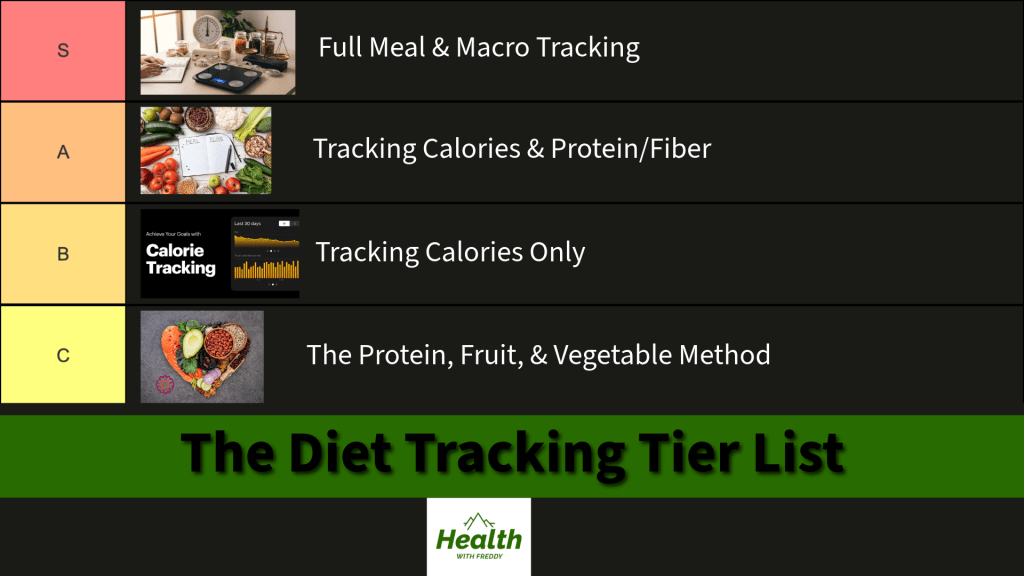
Let’s face it: Diet tracking can feel overwhelming. And yet, it is one of, if not the most powerful tools you can use to create progress.
There’s a big difference between optimal and the best. I’ve talked about this concept before, the best method isn’t the most extreme one, it’s the one you can stick to long enough to create awareness and results.
Below is my personal diet tracking tier list, ranked from the most in-depth to the most basic. Each tier has its place depending on your goals, experience level, and lifestyle.
Important note: Higher tiers aren’t “better” in a moral or motivational sense, they’re simply more precise. The right tier is the one that fits your current goals and lifestyle.
S-Tier: Full Meal & Macro Tracking

This is the most detailed form of diet tracking and typically involves using apps like MyFitnessPal, Lose It!, or Cronometer to log every food you eat. You’re tracking calories along with macronutrients like protein, carbohydrates, and fats.
When done correctly, this method leaves very little room for error. However, done correctly means you’re measuring portions with a food scale, as well as accounting for cooking oils, sauces, and liquid calories, and ensuring that your diet matches your goals.
Pros:
- Extremely accurate
- Guarantees you aren’t “missing” calories
- Excellent for fat loss plateaus or physique-focused goals
Cons:
- Time-consuming
- Requires consistency and attention to detail
- Can feel mentally draining if done long-term
In my experience, full macro tracking is most valuable as a short-term learning tool. I highly recommend doing this for a few weeks, as it teaches you what proper portion sizes look like and how different foods can actually fit into your day. Once that awareness is built, many people can transition to a simpler approach without losing progress.
Best for: Short-term learning phases, breaking plateaus, or advanced-level goals
A-Tier: Tracking Calories + Protein/Fiber
This is where we start to balance effectiveness with sustainability.
Instead of tracking every macro, you focus on:
- Total daily calories
- Protein intake
- Fiber intake (optional, but recommended)
Protein is critical for muscle development, recovery, and keeping you full. Fiber helps with digestion, creating bulk in your diet, and improving overall diet quality by encouraging fruits, vegetables, and whole foods.
One of my favorite strategies here is simple math:
- Calculate your daily calorie, protein, and fiber targets
- Divide them by the number of meals you plan to eat
- Build each meal to roughly hit those numbers
When every meal is successful, the full day takes care of itself.
Pros:
- Highly effective for fat loss and muscle maintenance
- Less mentally demanding than full macro tracking
- Encourages higher-quality food choices
Cons:
- Still requires some tracking
- Slightly less precise than Tier 1
For most people, this is a realistic sweet spot, structured enough to produce results, flexible enough to maintain for a long period of time.
Best for: Most people seeking long-term fat loss or body recomposition
B-Tier: Tracking Calories Only
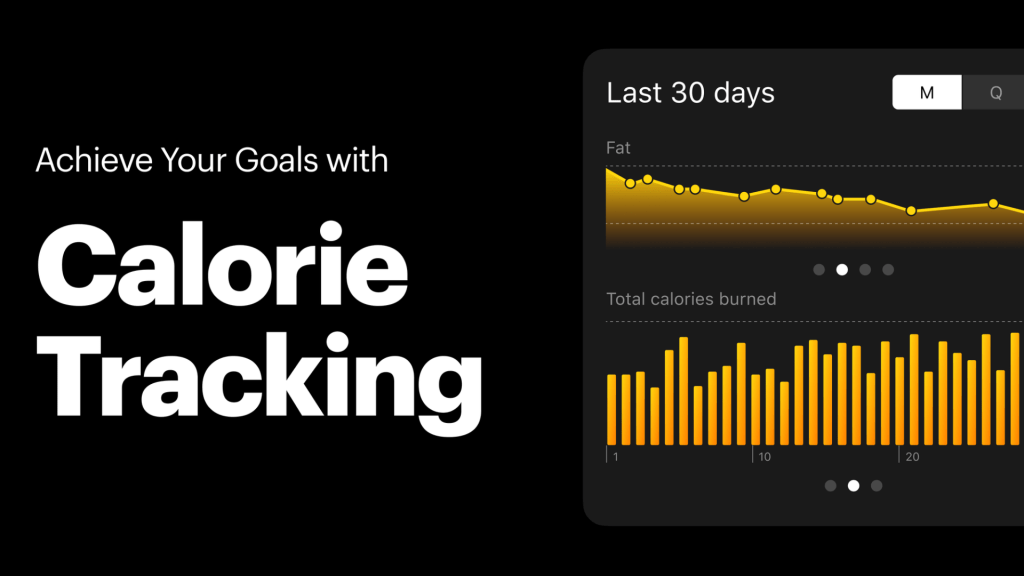
If your primary goal is weight loss, calorie tracking alone can be very effective.
With this method, you’re no longer worrying about macros, you’re simply becoming aware of how many calories you’re consuming each day. By following this simple level of tracking you may find it exposes simple habits you didn’t even know were holding you back. Most commonly people find their frequent snacking, oversized portions, or liquid calories add up fast. The fact of the matter is that even “sub-optimal” tracking creates awareness, and awareness drives change.
Pros:
- Simple and approachable
- Effective for weight loss
- Highlights problem areas quickly
Cons:
- Doesn’t guarantee adequate protein or nutrient intake
- Less optimal for muscle building goals
For many people, calorie tracking alone can spark a momentum of weight-loss.
Best for: Beginners or anyone struggling to understand why progress has stalled
C-Tier: The Protein, Vegetable, & Fruit Method
This is the simplest tier and requires zero apps or numbers.
The rule is straightforward:
For every meal, eat a protein, a vegetable, and a fruit.
This isn’t meant to be nutritionally perfect, but it creates a strong, guided structure when precision isn’t realistic.
Protein keeps you full and supports muscle growth. Vegetables provide fiber and micronutrients. And fruit satisfies sweet cravings without excessive calories. When followed consistently, this strategy makes it very difficult to overeat.
It’s also easy to apply at restaurants and social events, which is where most plans fall apart. Even if you utilize higher tiers for a majority of your week, this method can be leaned on when those tricky weekend events come around.
Pros:
- Extremely simple
- No tracking required
- Easy to maintain long-term
Cons:
- Least precise
- Progress may be slower
- Harder to pinpoint what is working and what is not
This tier works best for people who value simplicity and lifestyle balance over precision.
Best for: Busy lifestyles, social weekends, or those prioritizing simplicity over precision
Note: You don’t have to stay in one tier forever. Most people move up or down depending on their season of life.
Final Thoughts
The biggest takeaway is this: any level of paying attention to your food is better than none.
Most people underestimate where their diet is falling short. Tracking, at any level, reveals that clarity. Another key addition is pairing diet tracking with consistent weigh-ins as this helps ensure progress is moving in the right direction.
I recommend weighing yourself at least three times per week and averaging the results. This is because your daily weight fluctuates, and doing it only once a week may either discourage you when you’re actually making progress (if your weight fluctuates higher), or gives you a false sense of security when you’re actually making mistakes (when your weight fluctuates lower)
Finally, remember that diet doesn’t fix everything. Hydration, sleep, and regular exercise are all imperative to achieving good results. Keep calm, and track on.
If you’re unsure which tier you should be using, or how to transition between them, that’s exactly where coaching helps.
Follow me on Instagram for weekly education, practical strategies, and real-world applications of these principles. New blog posts drop every Monday, and if you want help applying this to your lifestyle, reach out. There’s always a “best” method for you, we just have to find it.



 Health With Freddy
Leave a comment