

Most people don’t struggle with cardio because they’re lazy.
They struggle because they’re guessing.
A typical cardio session looks like this: hop on a machine, push hard for 15–30 minutes at some random level of intensity, sweat a lot, feel exhausted, and hope that means progress. While that approach feels productive, it often leads to stalled results, burnout, and inconsistent habits.
The truth is, cardio works best when it’s intentional. And that starts with understanding heart rate zones.
The Problem With Random Cardio
Your body adapts specifically to the stress you place on it. Cardio is no different. Different intensities create different adaptations, and when every workout lives in the same uncomfortable middle ground, you miss out on many of the benefits cardio can provide.
Instead of training randomly, the better approach is to organize cardio around heart rate zones, each with a different purpose.
This is how I program cardio for a majority of my clients.
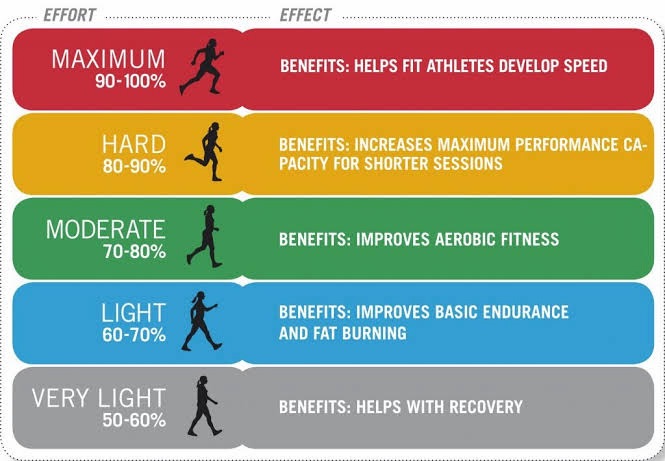
Understanding Heart Rate Zones
To estimate your heart rate zones, start with this formula:
Estimated Max Heart Rate = 220 − your age
This isn’t perfect, but it’s a great starting point for most people. From there, we use percentages of that max heart rate to dictate your intensity.
Below are the three main zones I recommend for most people, along with how to use them effectively.

Zone 2: The Foundation (60–70% of Max Heart Rate)
Zone 2 is where most people should spend the majority of their cardio time.
How often:
2–3 sessions per week
Duration goal:
Build up to 45–60 minutes per session
(Start with 15–30 minutes to build consistency first)
Why Zone 2 Matters
Zone 2 builds your aerobic base: your body’s ability to produce energy efficiently over time. This foundation of endurance allows you to stay in higher heart rate zones longer when needed and recover faster afterward.
At this intensity, your body relies more heavily on fat as a fuel source compared to higher-intensity cardio. While the baseline calories may be lower, the efficiency and repeatability of Zone 2 make it ideal for long-term fat loss and health.
Additional Benefits
- Low impact on joints
- Easy to repeat without excessive fatigue
- Improves cardiovascular health and endurance
- Ideal for building long-term consistency
How It Should Feel
You should be able to hold a full conversation during Zone 2 cardio. If you can’t speak in complete sentences, cool it down hotshot.
A great way to stay consistent with Zone 2 is to pair it with something you enjoy. This could be podcasts, audiobooks, or even my favorite, a Netflix show (Stranger Things is goated).

Zone 3: Tempo Work (70–80% of Max Heart Rate)
Zone 3 sits between easy endurance work and high-intensity training.
How often:
2 sessions per week
Duration goal:
Build up to 20–30 minutes per session
(Start with 5–10 minutes to build the habit)
Why Use Zone 3
This zone improves stamina and performance by challenging your aerobic system more than Zone 2, without the high recovery cost of Zone 4.
It’s the perfect intensity to burn more calories while also improving your ability to work harder, making it a useful middle-ground between low and high intensities.
Best Uses
- Stairmaster (My favorite for this zone)
- Incline walking
- Arc Trainer or Elliptical
How It Should Feel
You should be able to talk in short phrases, possibly with some heavier breathing. Conversation is still possible, but you’ll feel the exertion.
When starting out, aim for the lower end of the zone to help with compliance. This zone still shouldn’t feel like you’re suffering too hard.

Zone 4: The Finisher (80–90% of Max Heart Rate)
Zone 4 is what most people picture when they think of effective cardio.
How often:
1–2 sessions per week
Duration goal:
Build up to 10–15 total minutes
(Start with as little as 5 minutes)
Why Zone 4 Is Useful
Zone 4 trains your anaerobic system, improving speed, athleticism, and top-end performance. It carries over well to HIIT workouts, circuit training, sports, and physically demanding jobs.
Best Uses
- Assault bike (My personal favorite)
- Sprints
- Spinning bike intervals
- HIIT Exercises
Important Note
Zone 4 relies heavily on stored carbohydrates (glycogen) for fuel. When overused, especially without proper recovery or nutrition, it can start to burn muscle and increase fatigue.
This is where many people go wrong. Most people overuse high-intensity cardio, thinking harder is always better. However in reality, Zone 4 should be used strategically and sporadically, not daily.
Talking in this zone is possible, but difficult, and you’re not gonna be begging to do it. An interval timer is useful for this zone, as sustained effort isn’t possible if you’re doing it right.
Final Thoughts
A smart cardio plan follows a simple rule:
Roughly 80% of your cardio should be done at lower intensities (Zone 2).
Consistency matters more than intensity. When cardio is programmed correctly, it should help you:
- Feel better
- Perform better in workouts and life
- Maintain or decrease your body fat percentage
- Improve long-term health and longevity
Sports and other recreational activities (hiking/kayaking etc.) are also excellent ways to get your cardio in without it feeling like a chore.
For the best results, I highly recommend using a heart rate monitor (Fitbit, Apple Watch, Garmin, etc.). Over time, you’ll likely notice:
- Lower resting heart rate
- Improved endurance
- Decreased body fat
- Greater overall energy
If you don’t have access to a heart rate monitor, it is still possible to train for these zones by paying attention to the symptoms of each zone instead.

Need Help Getting Started?
If you’re interested in guidance with structuring your cardio the right way, contact me for a FREE Phase 1 Cardio Program to help you build consistency and confidence from the ground up.
Train smarter, not harder, and let your cardio work for you, not against you.




 Health With Freddy